Underwriting
Cap rate in real estate: the Mexico hotel adjustments that change the number
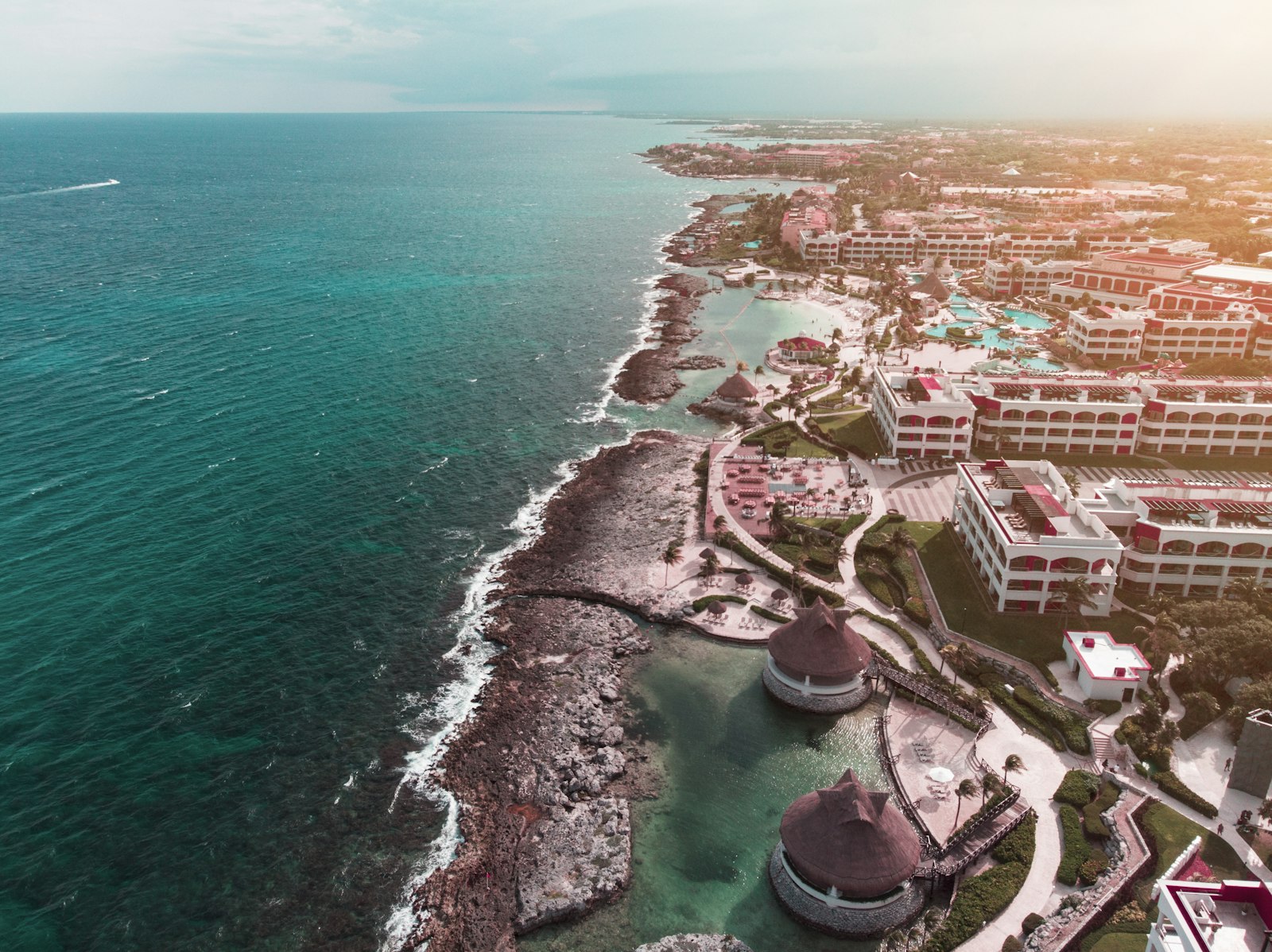
Cap rate is the most-quoted number in real estate and the most-misread. The cap rate real estate formula is trivial: net operating income divided by price. The discipline is entirely in the inputs. In U.S. core markets, a quoted cap rate is usually close to the truth. In Mexican boutique hospitality, the headline number a broker hands you is almost always wrong in the buyer’s favor, because it ignores recoverable IVA, fideicomiso and closing frictions, and the operating intensity of an F&B-heavy hotel. This piece is about the adjustments that turn a marketing cap rate into a number you can actually underwrite.
Our thesis is simple. The investors who win off-market hospitality in the Riviera Maya are not the ones chasing the lowest entry cap. They are the ones who can compute the adjusted cap rate faster and more honestly than the seller. That gap is the edge.
Cap rate real estate basics, in one minute
A capitalization rate is the unlevered annual return on a property bought with cash: net operating income (NOI) divided by market value or price. NOI is revenue minus operating expenses, before debt service, capital expenditure, and income tax. A property throwing off $80,000 of NOI at a $1,000,000 price trades at an 8% cap. Raise NOI to $100,000 and the value, at the same cap, is $1,250,000. That second-order effect, value moving inversely with the cap and directly with NOI, is the entire game.
So “what is a good cap rate” has no universal answer; the cap rate is a price on risk and growth. Lower caps signal safer, higher-growth assets and richer pricing; higher caps signal more risk or thinner growth and cheaper entry. A stabilized core asset in a gateway city might trade below 6%. A boutique hotel in an emerging coastal market should demand more. The number only means something once you trust the NOI underneath it, and that is exactly where cap rate real estate analysis breaks down in Mexico.
Work the cap rate formula in both directions and the leverage becomes obvious. Buy a 20-key hotel for $4,000,000 with $320,000 of genuine trailing NOI and you have bought an 8% cap. Reposition the F&B and the rate strategy to lift NOI to $440,000, and at an exit cap of 8% the asset is worth $5,500,000 before you have touched a single wall. Most of the value created in hospitality is NOI growth multiplied by a stable cap, which is why the quality of the NOI input matters far more than the cap rate quoted on the flyer.
The cap rate a listing shows you is gross
Broker cap rates in Mexico lean on pro-forma NOI, the operator’s best-case stabilized year, not trailing actuals. They frequently fold in revenue that has not been earned, understate management and F&B cost loads, and quietly assume the buyer inherits a clean tax and title position. Take the quoted cap rate as a starting hypothesis, never a fact. The real work is rebuilding NOI from the bottom up and re-pricing the frictions the seller conveniently left out of the denominator.
What cap rate real estate models miss in Mexico
Three adjustments separate a tidy U.S.-style cap rate from one that survives a Mexican boutique-hotel acquisition. Skip any of them and the cap rate real estate buyers quote each other will be off by hundreds of basis points.
1. Recoverable IVA changes your basis
Mexico’s 16% value-added tax (IVA) applies to much of the acquisition and capital-expenditure stack, but for a properly structured hotel operation a large share is creditable, not a sunk cost. Buyers who treat IVA as pure expense overstate their all-in basis and understate their true yield. Model the recoverable portion explicitly. Our Closing Cost Estimator separates the ISAI transfer tax, notario fees, and the recoverable 16% IVA credit, so your basis, and therefore your going-in cap, reflects what you will actually pay rather than the sticker.
2. Fideicomiso and closing frictions are real basis
Foreigners hold coastal property through a bank trust, the fideicomiso, which carries setup and annual costs and shapes how the whole deal is structured. Those costs, plus transfer tax and notario, are part of your entry price and therefore drag your cap rate downward. We covered the ownership mechanics in our explainer on how foreigners actually own coastal Mexican property. For underwriting, the point is narrow: every peso of friction at closing raises your basis and lowers the cap you truly bought.
3. Boutique hotels are operating businesses, not triple-net boxes
A boutique hotel with a restaurant, a bar, and a rooftop is an operating company wearing a real-estate costume. Food and beverage carries thin margins and heavy labor; management fees, OTA commissions, and sharp seasonality swing NOI hard from year to year. A cap rate built on room revenue alone flatters the asset. Underwrite the departmental P&L line by line, not a single blended margin, or you will overpay on a number that was never real to begin with.
A 9% pro-forma cap can become a 7% trailing cap once IVA basis, fideicomiso friction, and honest F&B costs are in the model. That 200-basis-point gap is the deal.
What hotel cap rates actually run
Context helps. Per CBRE’s U.S. cap-rate survey, U.S. hotel cap rates through 2025 settled into a wide band: roughly the low-8% range for luxury and upper-upscale assets and into the 9s for upscale and upper-midscale product, well above the sub-6% caps on core multifamily or industrial. Hospitality prices wider because the income is operational and cyclical rather than contractual. As JPMorgan explains in its primer on cap rates, the metric is fundamentally a read on risk and expected growth, not a fixed yield. A Riviera Maya boutique asset should clear a premium to U.S. norms to compensate for market depth and operating risk, and that premium only shows up after the three adjustments above.
Cap rate is the entry; yield on cost is the decision
The going-in cap is one frame, and a narrow one. The decision actually lives in the spread between your going-in cap and your stabilized yield on cost, the return after you have repositioned the asset and grown NOI. A modest going-in cap with a credible path to a much higher yield on cost is a better trade than a fat headline cap with no upside behind it. Leverage, debt service coverage, and the IVA credit then determine what the equity earns. Run all of it. Our Underwriting Tool computes going-in cap, stabilized yield on cost, cash-on-cash, DSCR, and levered IRR for Mexico boutique hotels, with the IVA credit and fideicomiso costs already built in, so you can move from a marketing cap rate to a defensible one in minutes rather than spreadsheets.
Market timing compounds the math. Demand across parts of the Riviera Maya has repriced, and softer top-line trends widen the gap between asking caps and clearing caps. We track that signal in the SaltVale Distress Index. When a seller’s pro-forma cap and a buyer’s trailing cap diverge, patient and well-underwritten capital sets the price, not the listing.
The takeaway
Cap rate is not the answer; it is the question. In Mexican hospitality, the headline cap rate real estate brokers quote is a hypothesis built on the seller’s best case. Rebuild the NOI, price the IVA basis and the fideicomiso frictions, underwrite F&B honestly, and compare the going-in cap to the yield on cost. The number you trust at the end is the only one worth paying for, and computing it before the seller does is the whole job.
Join Deal Flow
Off-market Riviera Maya hospitality, underwritten the way buyers should underwrite it. Get the deals, and the adjusted numbers, before the market does.