Market Intelligence · Riviera Maya
Playa del Carmen Real Estate: The Off-Market Hospitality Angle
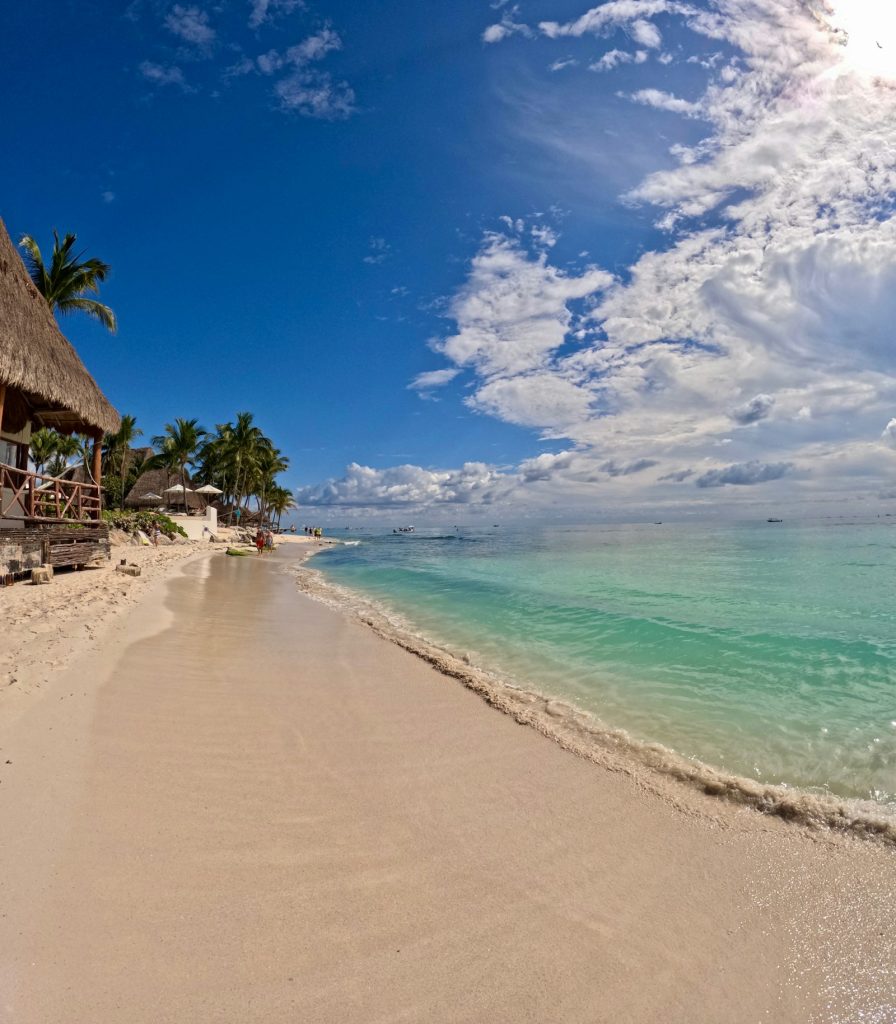
Most capital that flows into Playa del Carmen real estate is aimed at the wrong asset. The search traffic, the brokerage inventory, the glossy pre-sale renderings — almost all of it points at retail condos priced on comparables and sold on lifestyle. That market is crowded, yield-compressed, and increasingly correlated to a single exit: the next foreign buyer paying more than you did. The value that actually underwrites itself sits one layer down, in the off-market hospitality stock that trades on operating cash flow rather than on the hope of appreciation.
This is the distinction SaltVale is built around. Playa del Carmen real estate is not one market — it is at least two, and they behave nothing alike. Understanding which one you are buying is the difference between owning a coupon and owning a bet.
85.4% — average Riviera Maya hotel occupancy in the last week of February 2026, one of the highest sustained rates in the Americas.
Why the condo market misleads Playa del Carmen real estate buyers
The headline Playa del Carmen real estate keyword — roughly 1,300 U.S. searches a month at a ranking difficulty of 27 — is dominated by portals selling one-bedroom condos in the 200,000-to-450,000-dollar band. Those units are real, and some cash flow. But three structural facts compress their returns. First, supply is elastic: developers can and do add towers faster than demand absorbs them, which caps rent growth. Second, the buyer pool is thin and foreign, so pricing tracks sentiment in Toronto and Dallas more than fundamentals in Quintana Roo. Third, the gross yields quoted by sellers rarely survive contact with real costs — HOA fees, vacancy, management, and the recoverable-but-real 16% IVA that most listings ignore.
Run any of these condos through a disciplined model and the picture flattens. That is precisely what our Underwriting Tool and Closing Cost Estimator are designed to force: a going-in cap rate net of every holding cost, not a brochure yield. When you strip the optimism, the median pre-sale condo in Playa del Carmen prices like a bond with equity risk — and that is not a trade worth crossing a border for.
The hospitality layer: where the cash flow lives
The off-market layer is different in kind. Small hotels, boutique properties, and mixed-use buildings in and around Playa del Carmen are priced on trailing revenue and, when distressed, on the seller’s need to exit. They are underwritten on occupancy, average daily rate, and cost of operations — the same variables that drive an institutional hotel deal anywhere, only at an entry basis that would be impossible in the U.S. Sunbelt. Occupancy in the region is not a projection; it is a published number.
Quintana Roo — the state that contains Playa del Carmen, Cancun, and Tulum — welcomed roughly 20 million visitors in 2024 and closed Holy Week 2026 at 80.7% average hotel occupancy, up from 78.9% a year earlier, according to Mexico’s official tourism statistics system, DATATUR / SECTUR. The state’s hotel infrastructure spans more than 1,478 properties and 135,000 rooms. Demand of that depth and consistency is what lets a boutique hotel in Playa del Carmen support a stabilized yield-on-cost in the double digits — a spread that simply does not exist in the condo comps.
Connectivity is the moat
The reason this market rewards the hospitality thesis is connectivity, and connectivity is measurable. Cancun International Airport — the gateway 45 minutes north — handled roughly 29.3 million passengers in 2025, including 19.4 million international arrivals, per operator ASUR, the NYSE-listed concessionaire that publishes monthly traffic. That is second only to Mexico City among the country’s airports, and it feeds the Riviera Maya lodging market directly.
Layer on the Tren Maya, whose Section 5 electrified line now links the Cancun airport to Playa del Carmen and Tulum, and the demand catchment widens again. Infrastructure of this scale does not lift a one-bedroom condo’s rent in a linear way — but it structurally raises the floor under room-night demand, which is exactly the variable a hospitality buyer is long. The condo speculator is exposed to the resale market; the hotel owner is exposed to the tourist. Only one of those has been printing record numbers for a decade.
The retail market asks you to believe the next buyer will pay more. The hospitality market asks you to believe people will keep flying to the Caribbean. We know which assumption we would rather underwrite.
The entry basis a foreign buyer actually faces
The other reason the hospitality angle wins is structural, and it is where inexperienced buyers lose money before they ever collect a peso of revenue. A foreigner buying inside the restricted coastal zone — which includes all of Playa del Carmen — holds title through a bank trust, the fideicomiso, rather than in their own name. It is a well-worn, secure mechanism, but it carries setup and annual costs, and it interacts with the acquisition-tax and IVA framework in ways a U.S. buyer will not intuit. We wrote the full explainer on how foreigners actually own coastal Mexican property for exactly this reason.
Those frictions are fixed costs, and fixed costs punish thin margins hardest. On a 300,000-dollar condo yielding a real 4 to 5%, the trust fees, notario, and transfer tax meaningfully erode the return. On a boutique hotel bought at an operator’s basis and throwing off double-digit yield-on-cost, the same absolute costs are a rounding error against the income. Scale changes the math — and a share-deal structure, where the buyer acquires the entity rather than the asset, can avoid the ISAI transfer tax and inherit an existing IVA credit entirely. This is why the same closing framework that looks burdensome on a condo looks trivial on a cash-flowing hospitality asset, and why we model it explicitly rather than waving it away.
How SaltVale reads Playa del Carmen real estate
We treat Playa del Carmen real estate as a buyer-side intelligence problem, not a listings problem. That means three things in practice. We source off-market — owners who need to sell, not agents who want to list, which is the inventory that surfaces in our Opportunities pipeline and in assets like The Carmen. We underwrite on operations, holding every deal to a cap rate, a DSCR, and a levered IRR that survive real Mexican closing costs and the IVA mechanics most foreign buyers get wrong. And we track distress independently, because the single best entry point into this market is a motivated seller in a soft window — the signal our Distress Index is designed to surface.
None of this requires believing Playa del Carmen is undiscovered. It plainly is not. It requires believing that the crowded, well-lit part of the market — the condo listings everyone searches for — is not where the risk-adjusted return is. The quiet part, the hospitality assets that never hit a portal, is where an operator’s basis and a tourist’s dollar do the work that a speculator’s optimism has to do everywhere else.
The takeaway
If you are evaluating Playa del Carmen real estate the way the search results tell you to — by condo price per square meter — you are measuring the wrong thing. Price the cash flow. Price the occupancy. Price the cost of getting a traveler into the room. Do that honestly, and the boutique hospitality layer beneath the listings stops looking exotic and starts looking like the most durable real estate income in the hemisphere.
See the deals the listings never show
SaltVale sources off-market Riviera Maya hospitality assets and underwrites them on operating fundamentals. Join Deal Flow to see what is actually moving in Playa del Carmen.