Buyer-Side Cost Guide
How Much Does It Cost to Buy a Hotel? The Full Budget, Line by Line
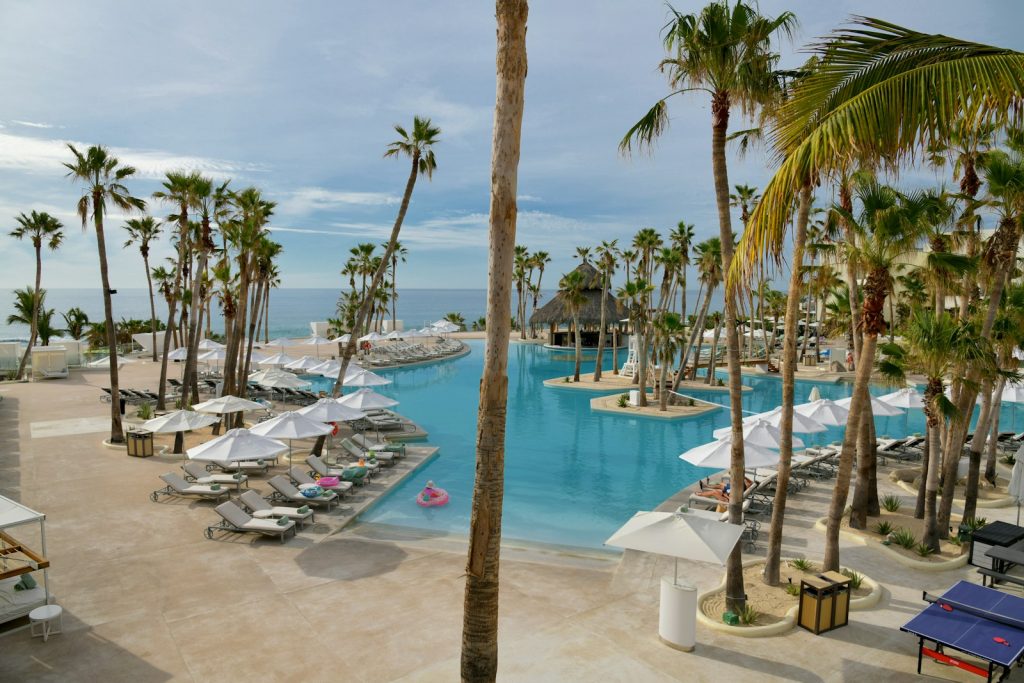
How much does it cost to buy a hotel? The honest answer is the asking price plus everything that sits on top of it: transfer tax, notary and legal fees, trust setup, tax on the building, the capital plan and the cost of the money you borrow. This guide walks through each line for a boutique hotel in Mexico and the Caribbean, using real asking prices from current opportunities and the same assumptions behind our buyer-side tools.
Buyers who budget only the headline number tend to discover the rest at the closing table. Buyers who budget the full stack can compare a $2.8M boutique hotel with an $8.0M beachfront asset on equal terms, because they are comparing all-in cost per key rather than marketing prices. That is the habit this guide is built to create.
How much does it cost to buy a hotel? Start with price per key
Hotels trade on price per key (per room), not per square foot. It is the fastest way to compare assets of different sizes, and it is the number lenders, appraisers and other buyers reach for first. Across the hospitality assets currently on our Opportunities page, asking prices span a wide range:
| Asset | Market | Asking | Per key |
|---|---|---|---|
| Hotel Kinbé (30 keys) | Playa del Carmen | $2.8M | ~$93K |
| Tribe Resort (50 rooms) | Samaná, Dominican Republic | $7.5M | ~$150K |
| Hotel #200 (95 rooms) | Tulum | $16.5M | ~$174K |
| The Carmen (37 keys) | Playa del Carmen, beachfront | $8.0M | ~$216K |
| Calabash Bight Resort (7 bungalows) | Roatán, Honduras | $1.55M | ~$221K |
Per-key figures are simple division of the published asking price by the published key count; listed market picks can change, so treat them as a snapshot. The spread tells the story. A stabilized 100-meters-to-the-beach boutique hotel prices very differently from a beachfront asset with a rooftop venue, and a seven-bungalow island resort carries a premium per key because of its shoreline and scale. Location, beach access, food and beverage, and how much of the upside is already captured all show up in that one number. Browse more examples on our hotels for sale in Mexico and Caribbean hotels for sale pages.
A useful reference point is replacement cost. The HVS 2024 U.S. Hotel Development Cost Survey put median development cost at roughly $255,000 per room for select-service hotels and $405,000 per room for full-service hotels in the United States. Construction costs differ in Mexico, but the comparison is still instructive: buying an operating hotel with a proven demand base can be a meaningfully cheaper route to a key than building one, and it comes with cash flow from day one.
The closing costs that sit on top of the price
In Mexico, the main acquisition costs for a foreign hotel buyer fall into four buckets. Our Closing Cost Estimator uses these starting assumptions for Quintana Roo, which you can adjust to your deal:
- ISAI (acquisition or transfer tax): set by the municipality, around 2.2% in Playa del Carmen and Cancún and around 4% in Tulum, assessed on the highest of price, appraisal or cadastral value.
- Notario and legal: about 1.5% of price as a working assumption. The notario público formalizes the sale and the deed.
- Registry, appraisal and miscellaneous: about 0.75% of price.
- Fideicomiso: about $2,000 to set up the bank trust used for foreign ownership in the coastal zone, plus roughly $600 a year to maintain. Our guide to the fideicomiso explains when a Mexican company is the better vehicle.
Together these usually land in the mid single digits as a percentage of price. Municipality matters more than most buyers expect. On a $16.5M asset, the gap between a 2.2% and a 4% ISAI rate is close to $300,000, which is real money in any underwriting.
Structure matters too. Buying the shares of the company that owns the hotel, rather than the real estate itself, can avoid ISAI and carry over the seller’s existing tax credits. It also carries the company’s history, so it requires deeper diligence. The estimator models both routes side by side.
IVA: the 16% that changes the cash math
Mexico’s value-added tax, IVA, is 16%. Land is exempt, but the building portion of a commercial property and your renovation budget are not. When a price is quoted before IVA, that tax adds meaningfully to the cash you need at closing.
The good news for hotel buyers is that IVA paid on a property that runs taxable hotel operations is generally creditable against the IVA the hotel charges guests, under the rules administered by the SAT. In other words, it is a cash-timing cost more than a permanent one, provided the structure qualifies. Some assets already carry a credit: The Carmen, for example, comes with a $1M IVA tax credit. Our deeper read on the 16% IVA credit for hotel buyers covers how recovery works and where it can fail.
Capex, working capital and the first year
The closing statement is not the end of the budget. Three more lines belong in any honest answer to what it costs to buy a hotel:
- Capital plan. Rooms, roofs, pools and mechanical systems in a coastal climate have shorter replacement cycles than inland assets. Budget a renovation reserve from the property condition report, not from the listing photos.
- Working capital. Payroll, inventory and pre-paid expenses through the first low season. A hotel bought in the shoulder months can need several months of operating cushion.
- Diligence costs. Legal title review, environmental and structural reports, a financial audit of the trailing twelve months and, where relevant, a review of any ejido or concession history. These are paid whether or not the deal closes, so plan for them up front.
Demand data helps size these reserves. Mexico’s federal tourism statistics on DATATUR publish occupancy and visitor trends by destination, a useful independent check on the seasonality the seller describes.
Financing: what the money costs
Many international buyers acquire Mexican hotels with a high equity share, using offshore capital or seller financing rather than local bank debt. Where peso financing is part of the plan, the anchor is the policy rate. In September 2026 the Banco de México held its overnight interbank target at 6.50% for the fourth consecutive decision. Commercial hotel loans price above that, so run your debt service coverage at realistic rates before you count on leverage. The SaltVale Underwriting Tool models going-in cap rate, yield on cost, DSCR and levered IRR in a few minutes.
Putting the full cost to buy a hotel together
Here is an illustrative closing budget for Hotel Kinbé at its $2.8M asking price, using the estimator’s default assumptions (2.2% ISAI, 1.5% notario and legal, 0.75% registry and miscellaneous, a 70% building share and a price quoted before IVA). It excludes capex and working capital, which depend on the business plan.
| Line item | Amount |
|---|---|
| Purchase price | $2,800,000 |
| ISAI at 2.2% | $61,600 |
| Notario and legal at 1.5% | $42,000 |
| Registry, appraisal and misc at 0.75% | $21,000 |
| Fideicomiso setup | $2,000 |
| IVA at 16% on the building portion | $313,600 |
| Cash to close | $3,240,200 |
| Net of full IVA recovery | $2,926,600 |
That moves the effective cost from about $93,000 per key to roughly $108,000 per key at closing, and about $97,600 per key once the IVA is recovered. Transaction costs alone add about 4.5% to the price. The point is not the exact figure, which will move with structure, municipality and the land-to-building split. The point is that the number you underwrite against should always be the all-in basis, never the asking price.
So, how much does it cost to buy a hotel? For a boutique hotel on Mexico’s Caribbean coast, plan on the asking price plus mid-single-digit transaction costs, plus IVA cash at closing that is largely recoverable, plus a real capital and working-capital reserve. Build that stack before you make an offer and every opportunity becomes comparable. Our buyer-side playbook on how to buy a hotel covers the steps from sourcing to close, and the boutique hotels for sale and off-market hotels for sale pages show what is available now.
When you are ready to see deals that fit your budget, create a buyer profile with your target price, markets and timing. We match it against incoming hotels and send a short teaser first, with full financials following a mutual NDA.
Tell us what you want to buy
Share your budget, target markets and timing once. SaltVale sends matching hotels and resorts in Mexico and the Caribbean as they come in, with the underwriting to compare them on an all-in basis.
Sources: HVS 2024 U.S. Hotel Development Cost Survey (hvs.com); Banco de México monetary policy decisions (banxico.org.mx); SAT (sat.gob.mx); Sectur DATATUR (datatur.sectur.gob.mx). Asking prices from SaltVale Opportunities at time of writing. For budgeting only; not tax or legal advice.