Market Read
Quintana Roo Real Estate: Reading Five Markets, Not One
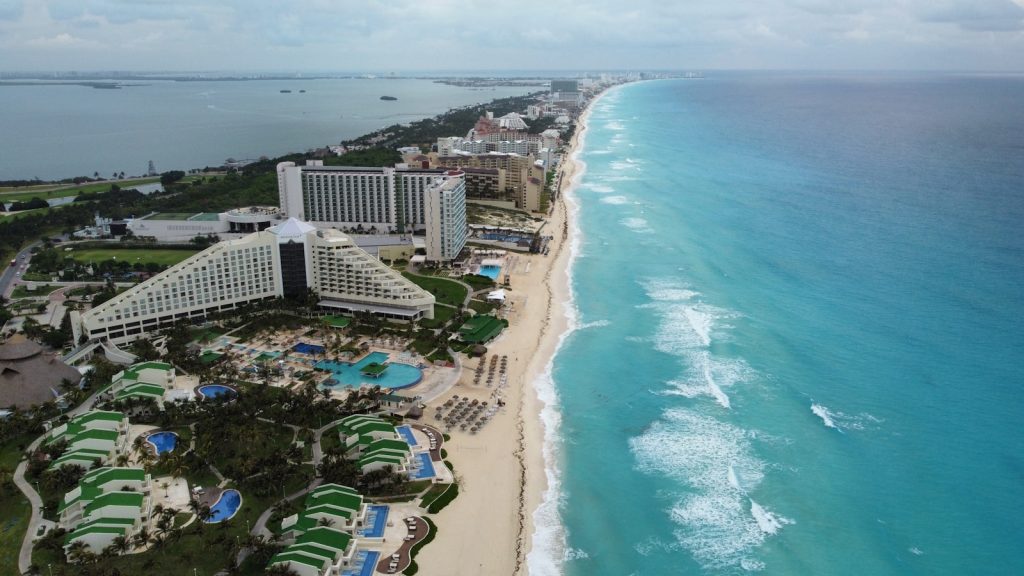
The single biggest mistake buyers make with Quintana Roo real estate is treating the state as one trade. It is not. The stretch of Caribbean coast from Cancún to Bacalar is a collection of micro-markets — Cancún, Playa del Carmen, Tulum, Puerto Morelos, Bacalar — each with a different buyer, a different demand base, and a very different risk profile. Underwrite them as one market and you will overpay for the froth and miss the cash flow.
The headline number is real: Quintana Roo posted roughly 8–12% nominal price growth year-over-year heading into 2026, strong by any global standard, and over 70% of buyers are international. But a state-level average tells you almost nothing about what you are actually buying. A branded pre-construction condo in Tulum and a cash-flowing boutique hotel in Playa del Carmen sit inside the same headline and behave like opposite assets. Our whole approach to Quintana Roo real estate starts by throwing the average out and pricing each submarket on its own demand.
The demand base is genuinely strong — that part is not a story
Start with the thing that makes the region investable at all: occupancy. Quintana Roo closed Holy Week 2026 at 80.7% average hotel occupancy, up from 78.9% a year earlier. Cancún hotels ran 74.0% in November 2025, up 1.5 points year-over-year, and the Cancún–Riviera Maya corridor is tracking toward roughly 15 million annual visitors. That is not a speculative bubble looking for a reason to exist; it is one of the most durable leisure-demand engines in the hemisphere, fed by a growing airport base and, now, the Tren Maya and the new Tulum airport improving overland and inbound connectivity.
That demand is why the region rewards operators. But strong tourism does not mean every asset class benefits equally. The gap between the region’s occupancy story and the short-term-rental reality is instructive: aggregate Airbnb data for Quintana Roo shows around 32.9% occupancy and a $255 average daily rate across the state. A one-bedroom condo marketed on a 12% pro-forma yield is very often underwriting the hotel occupancy number while earning the STR one. The demand is real; the way it gets sold to condo buyers frequently is not.
Five markets, five different trades
Cancún is the base case. It has the strongest airport, the deepest year-round demand, and the most institutional supply — which makes it less speculative than Tulum and more tourism-dependent than an inland city like Mérida. For a buyer who wants durable occupancy over capital-gains fireworks, Cancún and the hotel zone around Puerto Morelos are where the boring, bankable cash flow lives.
Playa del Carmen is the operator’s market. Prices are up roughly 55% cumulatively since 2020 and now sit above their long-term trend, so the pure appreciation trade is mostly behind us. What remains is the off-market hospitality angle: small hotels, hostels, and mixed-use buildings a few blocks off Fifth Avenue that trade on cash flow, not on a condo brochure. That is a very different opportunity than the retail-condo resale market most listings push, and it is the one we underwrite hardest.
Tulum is where discipline pays for itself. Established residential pockets — Aldea Zama, La Veleta, the hotel zone — have still shown annual gains reaching 15%. But the ultra-luxury and branded pre-construction segment has clearly cooled: oversupply has created genuine price pressure, delivery timelines have slipped, and a wave of “delivered in 2024” inventory is now competing for the same nightly guest. Tulum is not a market to avoid; it is a market where the asset you pick decides everything.
Puerto Morelos and Bacalar are the earlier-stage plays — quieter, cheaper, and more dependent on infrastructure catching up. Higher upside, thinner exit liquidity, and far more sensitive to a single road or airport project landing on time. They belong in a portfolio as a deliberate, sized bet, not as the anchor position.
The two risks the brochures leave out
Two risks are consistently underweighted in Quintana Roo real estate pitches, and both hit hospitality assets directly. The first is seasonality and sargassum. Occupancy that averages in the high 70s to low 80s across a peak week masks a wide swing between winter high season and the softer, hotter, sargassum-prone summer on the exposed Riviera Maya beaches. A pro-forma built on peak-season nightly rates and peak-season occupancy is not a pro-forma; it is a best case wearing a suit. Underwrite the trough, not the trailing twelve-month blend, and confirm which specific stretch of beach the asset actually fronts.
The second is exit liquidity. In the deep, liquid submarkets — Cancún, central Playa del Carmen — you can sell into a broad buyer pool when you need to. In the earlier-stage plays and in an oversupplied branded-condo tower, your exit is a much thinner market, and the same oversupply that pressured your entry price will be waiting for you on the way out. The time to price your exit is before you sign, not when you need the capital back.
The structure is the same everywhere — and it is not optional
Every coastal town in Quintana Roo, from Cancún to Mahahual, sits inside Mexico’s restricted zone: Article 27 of the Constitution bars direct foreign ownership within 50 kilometers of the coastline. Foreigners take title through a fideicomiso — a renewable 50-year bank trust that has conferred full beneficial ownership rights since 1973 — or, for income-producing property, through a Mexican corporation. Expect all-in closing costs of roughly 7–12% of the purchase price inside the zone, plus an annual trustee fee. None of this is a barrier; it is simply the entry ticket, and the structure you choose (trust versus corporation) has real tax consequences for how you recover IVA and how you are taxed on exit. We walk through that math in our guide to how foreigners actually own coastal Mexican property and in the Closing Cost Estimator.
How to underwrite Quintana Roo real estate without getting sold a story
The buyer-side discipline is the same one we apply to every deal in the region. Price the specific submarket, not the state. Underwrite to realized STR or hotel revenue, not to a developer’s stabilized pro-forma. Separate the appreciation thesis from the cash-flow thesis and require each to stand on its own — if a deal only works because prices keep rising 10% a year, it is a momentum bet, not an investment. And weight the risk of oversupply in exactly the segments (branded Tulum pre-construction, luxury condo towers) where the incentives push the most inventory.
Two tailwinds are worth respecting on the buy side. Banxico cut its policy rate to 7% in December 2025, which lowers the discount rate on every future peso of cash flow and improves financeability for the assets that can carry debt. And the connectivity build-out — Tren Maya, the Tulum airport — is a genuine structural demand driver, not a marketing line. Both are reasons to be constructive on the region. Neither is a reason to skip the underwriting.
Run the numbers on a specific asset with our underwriting tool, watch where demand is actually softening in the Distress Index, and see the deals we are tracking on the Opportunities page. For the town-level reads, our breakdowns of Tulum real estate in 2026 and the Playa del Carmen off-market hospitality angle go a layer deeper than this overview.
Quintana Roo is not a bet on a coastline. It is five separate bets on five separate demand curves — and the buyers who win here are the ones who refuse to price them as one.
See the deals before they hit the market
SaltVale is a buyer-side intelligence desk for off-market Riviera Maya hospitality. Join Deal Flow to get the underwriting, the distress signals, and the assets we are tracking across Quintana Roo.
Sources: Mexico Sectur / DATATUR tourism & occupancy data (datatur.sectur.gob.mx); Banco de México monetary policy announcements (banxico.org.mx).