Buyer-Side Investing Guide
How to Invest in Hotels: Five Routes, From Listed Shares to Owning the Keys
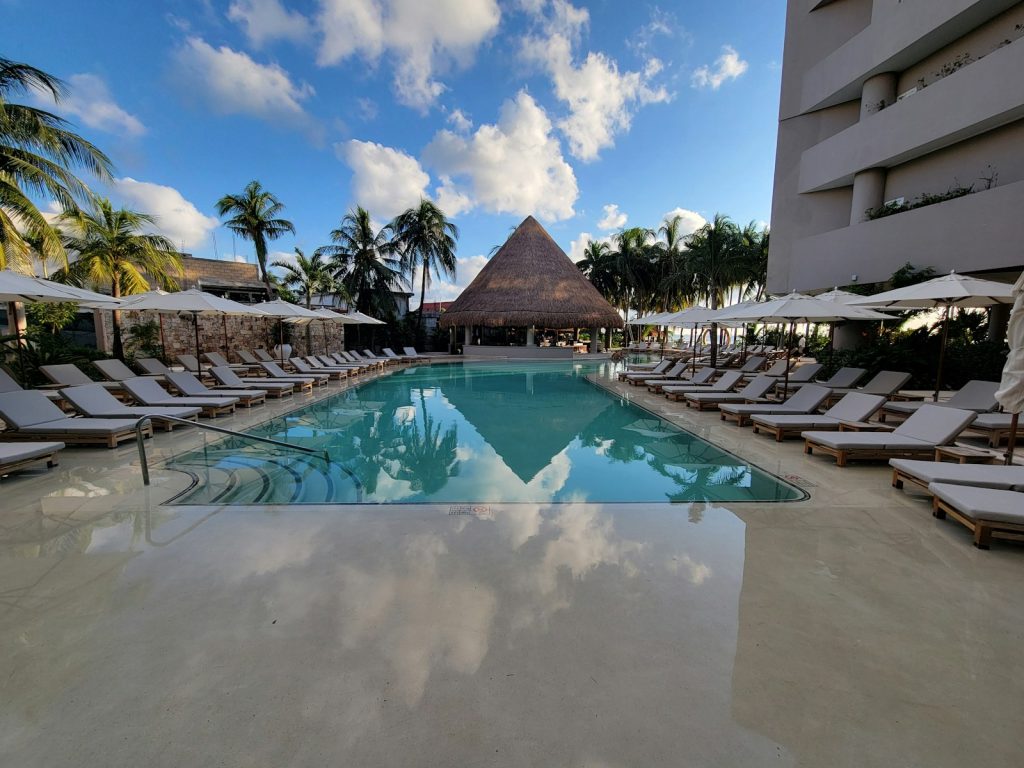
How to invest in hotels comes down to one early decision: how close to the property you want to be. You can buy listed shares that own hundreds of hotels, commit capital to a private fund, buy a single condo-hotel unit, partner with an operator, or acquire a boutique hotel outright. Each route trades control for convenience in a different way. This guide walks through all five, the numbers that matter in each, and what changes when the hotel sits in Mexico or the Caribbean.
Hotels are an unusual real estate asset. A lease is reset once a year or once a decade; a hotel room is repriced every night. That makes hospitality more sensitive to demand and to management quality than offices or apartments, and it is why investors who want to invest in hotels well tend to spend as much time on the operating business as on the building.
How to invest in hotels: the five routes compared
| Route | Control | Liquidity | Best for |
|---|---|---|---|
| Listed lodging REITs (or FIBRAs in Mexico) | None | Daily | Diversified exposure with small tickets |
| Private funds and syndications | Low | Locked for the fund term | Passive investors who want direct-asset returns |
| Condo-hotel units | Low to moderate | Moderate | Buyers who want personal use plus rental income |
| Joint venture with an operator | Shared | Low | Capital partners who want an experienced manager |
| Direct ownership of a hotel | Full | Low | Investors who want to set strategy and capture value-add |
1. Listed lodging REITs. In the United States, real estate investment trusts that own hotels and resorts trade on public exchanges, so you can invest in hotels with the same account you use for stocks. Nareit’s lodging and resorts sector overview describes how these companies own portfolios across segments from select-service to luxury. Mexico has its own version, the FIBRA, listed on the Mexican stock exchange. The SEC’s investor guide to REITs is a good primer on how they are taxed and what to check before buying. The trade-off is simple: liquidity and diversification, with no say over any individual hotel.
2. Private funds and syndications. A sponsor pools capital from several investors to buy one or more hotels. You receive a share of cash flow and sale proceeds and pay fees and a profit share to the sponsor. Read the operating agreement closely: the fee load, the hold period, the waterfall and who decides when to sell all shape what you actually earn.
3. Condo-hotel units. Common across the Riviera Maya, these let you own a single unit inside a managed building that rents it nightly. The entry ticket is lower than a whole hotel and you may get some personal use. Returns depend heavily on the rental program’s fee split and the building’s rules, so model them net of those costs.
4. Joint ventures with an operator. Many capital partners prefer to back an experienced hotel operator: the investor brings most of the equity, the operator runs the asset and earns a promote for performance. This is a practical middle path for investors who want direct-asset economics without running a hotel themselves.
5. Direct ownership. Buying the hotel itself gives you full control of the business plan: pricing, renovation, branding, food and beverage, and when to sell. It is also where the largest value-add opportunities sit, particularly in boutique properties that sit below the deal size many institutional buyers target. The rest of this guide focuses on this route.
The numbers that tell you whether a hotel is a good investment
Whatever route you choose, the same handful of metrics drives value. Learn to read them before you look at listings:
- Occupancy, ADR and RevPAR. Occupancy is the share of rooms sold, ADR is the average daily rate, and RevPAR (revenue per available room) combines them. RevPAR is the cleanest way to compare a hotel to its market.
- NOI. Net operating income after operating expenses and before debt. Ask for a trailing twelve months, not a projection.
- Cap rate. NOI divided by price. A higher going-in cap rate means more income per dollar invested today. Our guide to cap rates for Mexico hotels explains the local adjustments.
- Price per key. Price divided by rooms, the quickest way to compare assets of different sizes.
- DSCR and IRR. If you borrow, debt service coverage tells you how comfortably income covers payments, and IRR captures the full return including the eventual sale.
To see how wide the range is, look at assets currently presented on our Opportunities page. Hotel Kinbé in Playa del Carmen is a 30-key stabilized boutique hotel asking $2.8M, about $93K per key, with five-year occupancy averaging 79%. The Carmen is a 37-key beachfront asset asking $8.0M, a value-add play with a stabilized cap rate of about 17.5% and a $1M IVA tax credit. Further afield, Calabash Bight Resort in Roatán offers 7 beachfront bungalows at $1.55M, and Tribe Resort in Samaná has 50 rooms at $7.5M. Same asset class, very different risk and return profiles.
You can run any of these through the SaltVale Underwriting Tool, which calculates going-in cap rate, yield on cost, cash-on-cash, DSCR and levered IRR from a few inputs.
Investing in hotels in Mexico and the Caribbean
Coastal Mexico and the Caribbean attract hotel investors for a clear reason: durable leisure demand from North America and Europe, and boutique assets that often price below comparable US properties per key. Mexico’s federal tourism statistics on DATATUR publish occupancy and visitor trends by destination, a useful independent check on any seller’s numbers.
A few structural points shape how foreign buyers invest in hotels in Mexico:
- Ownership vehicle. Within the restricted coastal zone, foreigners typically hold property through a bank trust (fideicomiso) or a Mexican company. For an operating hotel, the company route is often the better fit. Our fideicomiso guide covers when each one applies.
- Transaction costs. Transfer tax (ISAI), notario fees and registry costs vary by municipality. The Closing Cost Estimator models them for Quintana Roo, including the share-deal alternative.
- IVA. Mexico’s 16% value-added tax applies to the building portion of a commercial property. For a hotel running taxable operations, it is generally creditable under rules administered by the SAT, so it is more a cash-timing cost than a permanent one when the structure qualifies.
Our full breakdown of how much it costs to buy a hotel puts these lines together into a closing budget. For a view of what is available, browse hotels for sale in Mexico, Caribbean hotels for sale and boutique hotels for sale.
Where direct hotel deals come from
Many of the best boutique hotels never reach a public listing. Owners who want discretion, staff stability or a quiet process often prefer to speak with a small set of qualified buyers first. That is why serious buyers build relationships before they need a deal: they tell advisors and brokers exactly what they want, and they are first in line when a matching asset comes to market.
The off-market hotels for sale page explains how that process works at SaltVale. Opportunities are shared as a short teaser first, with full financials following a mutual NDA, so buyers can screen quickly and owners keep their confidentiality.
A practical path to your first hotel investment
If you are deciding how to invest in hotels directly for the first time, this sequence keeps the process focused:
- Set your mandate. Budget, target markets, key count, and whether you want stabilized cash flow or a value-add plan.
- Choose your structure early. Ownership vehicle, tax position and financing all affect which deals work for you.
- Screen on the metrics. Compare price per key, trailing NOI and going-in cap rate before you spend on diligence.
- Underwrite the full basis. Price plus closing costs, IVA timing, capital plan and working capital.
- Diligence the business and the title. Financial records, property condition, permits and clean title. Our buyer-side playbook on how to buy a hotel walks through each step to closing.
The first step is the one most investors skip, and it is the one that makes everything after it faster. When you are clear on what you want to buy, the right opportunities can find you.
Tell us what you want to own
Create a buyer profile with your budget, markets and timing. SaltVale matches it against incoming hotels and resorts in Mexico and the Caribbean and sends a short teaser when one fits, with underwriting to compare it on an all-in basis.
Sources: Nareit lodging and resorts sector (reit.com); U.S. SEC investor guide to REITs (investor.gov); Sectur DATATUR (datatur.sectur.gob.mx); SAT (sat.gob.mx). Asset figures from SaltVale Opportunities at time of writing. For information only; not investment, tax or legal advice.